
The EUAA follows a robust methodology to gather relevant, reliable, accurate and up-to-date information. The information is collected through year-long desk research using reliable sources and interviews with national authorities.
When carrying out research, the EUAA follows the methodology and basic principles which were endorsed by the EUAA Management Board in 2013 and further developed to draft the Asylum Report, as explained in the Reader’s guide
The following principles are applied:
- Balanced overview and neutrality: the content should present a clear overview of the main features of asylum systems in EU+ countries. The tone of the content is neutral, presenting the findings in an analytical and factual manner. The information is descriptive and does not assess national policies and practices in the field of asylum.
- Transparency and integrity: The sources of information are referenced throughout the database. The methodology for selecting information from complementary sources is communicated in a clear manner.
- Contradictory information: When there is conflicting information on a matter or event, the EUAA consults national administrations for their comments. Information which is assessed by the EUAA to be incorrect or inaccurate after an analysis of the content is not published.
- Standardised language: To better inform wider audiences and to allow for the information to be comparable.
DIP is produced in accordance with Articles 5 and 6 of the EUAA Regulation. Information in DIP is supplemented by jurisprudential developments in the EUAA Case Law Database.
In line with the EUAA’s role as a centre of expertise on asylum, a balanced approach is taken to reflect the views of all relevant stakeholders in the functioning of the Common European Asylum System (CEAS). The sources of information are categorised into:
- national authorities of EU+ countries, including:
- asylum and reception authorities
- Ombudspersons
- other national stakeholders;
- complementary sources, including:
- EU institutions, agencies and networks,
- international and inter-governmental processes (e.g. UNHCR, IOM, Council of Europe treaty bodies)
- courts and tribunals based on decisions and judgments
- civil society organisations, think tanks and academia
Quality standards are applied when selecting the use of complementary sources. These include:
- Who is providing the information? Is it clear, is the source anonymous, what is the reputation of the source? Is the source specialised and an expert on a specific topic? Does the source have a known bias? What is the context in which the source operates?
- What information is provided? What is the real content/substance of the information produced? To what extent is it fact-based and documented? Is it delivered independently of the motivation of the source?
- Why are they providing this information? What is the agenda or mandate of the source? Does the source have a specific interest?
- How is the information presented? How is it formulated? Is the material presented in an objective and transparent way? Is it clear what methodologies are used? How is the information gathered by the source?
- When was the information gathered and when was it provided?
When assessing the expertise of complementary sources, particularly civil society organisations, the following additional elements are considered:
- History: How long has the source been in existence and engaging within the national context?
- Reputation: What is the reputation of the source and how is it viewed by practitioners and experts in the field, including national administrations? Based on its history, are there any known issues with the credibility of information shared by the source?
- Competence in asylum and reception: What is its stated mission and aim, as well as its technical expertise on the topic?
- Modus operandi: whether it is an advocacy-based or operational organisations, the information is weighted based on its stated advocacy role and the objective pursued, the activities conducted, and the methodology used.
- Incorrect information or inaccuracies on repeated occasions: Where complementary sources are noted to publish incorrect or inaccurate information on repeated occasions over a period of time, the EUAA will consider excluding them from the pool of sources.
Currently, the country pages include information on 12 thematic areas in asylum and reception. The page structure is the same for all countries to ensure comparability. The information is descriptive and does not assess national policies and practices in the field of asylum.
Information in the thematic pages is primarily sourced from legislation, official documentation produced by national authorities (reports, policies, websites, statements etc.), as well as information provided to the EUAA by national authorities.
Information from civil society organisations may be used in thematic pages when information from national authorities is not made available, to support information obtained from national administrations, or to provide contextual information on the practical functioning of the system. Information expressing assessments or views about the implementation of CEAS in the national context is not included in the thematic pages.
Regular validation cycles are important to reflect the current functioning of CEAS in each EU+ country. Once new information is included in the database, a disclaimer is included to notify that the content is undergoing a review and the validation process.
The validation process enables national administrations to comment, clarify or add information prior to it being published. In this respect, the EUAA and national administrations share the task of keeping DIP up to date: the EUAA conducts continuous desk research to update information and developments in DIP, and national administrations verify the accuracy of the thematic information through the validation process.
Changes suggested by national administrations are reviewed by the EUAA before they are published.
This process ensures that the information in the database is of high quality, accurate and up to date. For a visual representation of how the validation process works, see here:
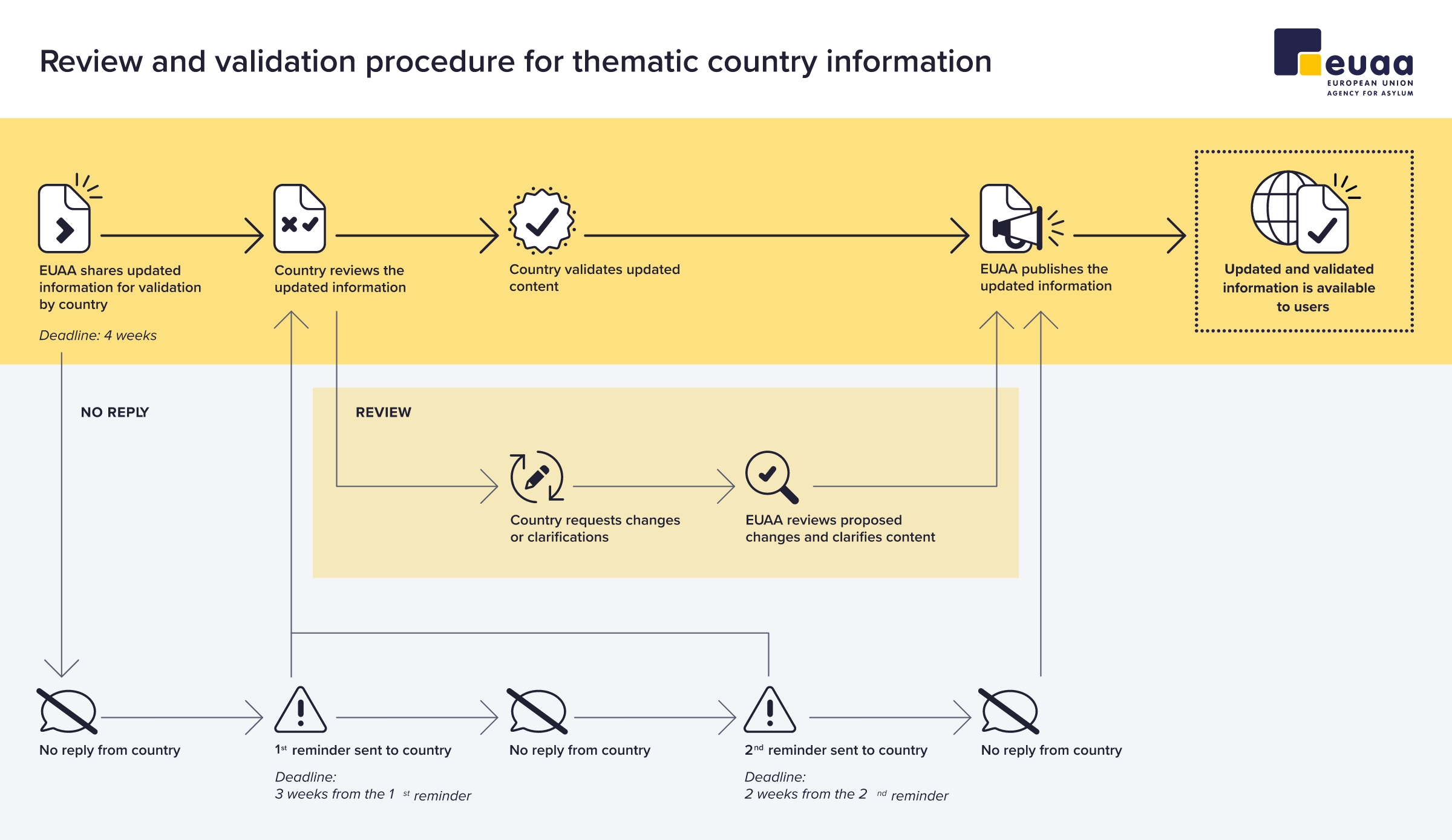
The validation process takes a maximum of 9 weeks until the information is published as validated in the database.